How Bilingualism Strengthens the Brain and Delays Cognitive Decline

The brain does not age in a straight line. Two people can have similar age-related changes in brain tissue, yet show very different levels of memory, attention, and daily function. One reason is cognitive reserve, the brain’s ability to cope with change by using its networks more flexibly.
Bilingualism may help build that reserve.
Managing two languages is not just a communication skill. It is a daily mental workout. A bilingual person often selects one language while holding the other back, switches between sound systems, adjusts to different social settings, and retrieves words from two vocabularies. Over years, that repeated effort appears to shape the systems that support attention, self-control, memory, and flexible thinking.
This does not mean speaking two languages prevents dementia or makes the brain immune to aging. The science is more careful than that. Research suggests bilingualism can delay the appearance of cognitive symptoms in some people, even when underlying brain changes still occur. The benefit seems to come from how the brain learns to manage complexity.
This article is informational only and is not medical advice. Concerns about memory loss, dementia, or cognitive change should be discussed with a qualified health professional.

The bilingual brain works harder in ordinary moments
Bilingualism is easy to romanticize, but most of its brain benefits come from very ordinary moments.
A bilingual person might greet a neighbor in English, answer a parent in Vietnamese, read a recipe in Spanish, text a friend using mixed phrases, then watch the news in another language. None of those moments has to feel difficult. Yet the brain is constantly choosing, suppressing, updating, and switching.
That is the key point. Bilingualism asks the brain to solve small conflicts all the time.
When two languages are active, even partly, the brain has to decide which one fits the moment. If someone asks for “water,” a Spanish-English speaker may also have “agua” available in memory. The chosen word wins, while the other word stays quiet. This selection can happen so quickly that the speaker barely notices it.
That process draws on several mental skills:
Selective attention The brain focuses on the language that fits the setting.
Inhibitory control The brain holds back the language that is not needed right now.
Cognitive flexibility The brain shifts between languages, sounds, grammar patterns, and social rules.
Working memory The brain keeps track of meaning while choosing words and sentence structure.
These skills are part of what psychologists often call executive function. Executive function helps with planning, attention, self-control, and switching between tasks. It is not one single ability. It is a set of related skills that support daily life.
For monolingual speakers, executive function still gets plenty of practice. Driving, cooking, caring for children, learning music, and solving problems all use these systems. Bilingualism is different because the practice is woven into speech itself. Language is used constantly. That means bilingual brains may get thousands of tiny repetitions across a normal week.
A person does not have to translate every sentence to receive this workout. In fact, fluent bilinguals often do not translate at all. They move directly from thought to language. The mental effort comes from managing two active systems and choosing the right one at the right time.
Both languages can stay active at once
One of the most interesting findings in bilingual language research is that bilinguals do not simply turn one language off. Both languages can remain active in the background, even when only one is being used.
This can create competition. A word in one language may sound like a word in the other. A grammar pattern may not match. A speaker may feel a word on the tip of the tongue, but in the “wrong” language. These moments can be frustrating, but they also show the brain doing its control work.
This constant control may strengthen communication between brain regions involved in attention and language. It may also encourage the brain to rely on alternate pathways when the usual route becomes less efficient with age.
The result is not a bigger vocabulary in every case, or faster word recall in every moment. Bilingual people can sometimes take slightly longer to name a picture in one language, because words are spread across two systems. The benefit is broader. It lies in the practice of managing competition.
Switching languages is a form of mental exercise
Language switching can be planned or automatic. A person may switch because the listener changes, because a specific word fits better, or because a family habit pulls one language into another. In many bilingual communities, switching between languages is not a mistake. It is a normal, skilled way of speaking.
This matters because switching requires control. The brain must track the listener, the setting, the topic, and the language itself. That is a rich mental task.
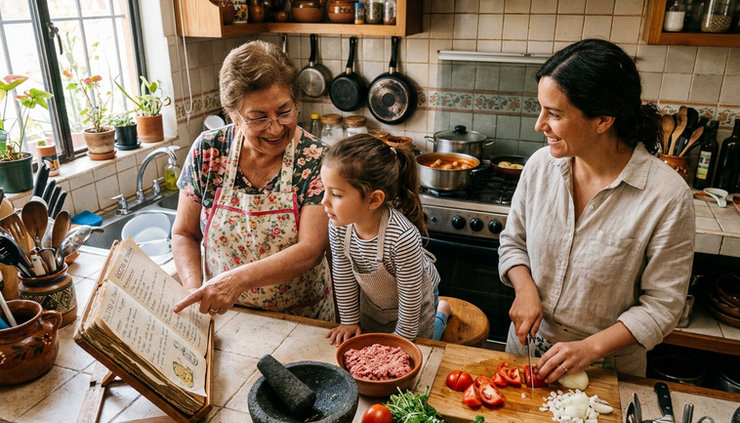
A bilingual grandparent might tell a story in one language, explain a school form in another, then use a mix of both with a grandchild. That is not confusion. It can be a sign of social precision. The speaker is matching language to relationship, emotion, and place.
Over a lifetime, that precision adds up.

Cognitive reserve is the brain’s backup plan
Cognitive reserve helps explain why bilingualism may matter for aging.
The idea is simple. The brain can experience age-related changes, yet some people continue to function well because their brains use resources efficiently or find alternate routes. Cognitive reserve is not a physical shield. It is more like a flexible support system.
Education, complex work, social connection, reading, music, exercise, and mentally demanding hobbies have all been linked to cognitive reserve. Bilingualism fits into this group because it repeatedly challenges attention, memory, and control.
Cognitive reserve does not stop aging. It may help the brain manage aging with more flexibility.
Think of a city with many roads. If one route slows down, traffic can move through another route. A city with only one main road has fewer options. In the same way, a brain with rich, practiced networks may handle damage or decline for longer before daily symptoms become obvious.
That is the central claim behind bilingualism and delayed cognitive decline. The brain may not avoid the biological changes linked with aging. Instead, it may compensate better.
Reserve can hide symptoms for a time
Research on bilingual aging often focuses on the difference between brain changes and outward symptoms. Some studies have found that bilingual adults show symptoms of dementia later than monolingual adults, even when both groups may have similar disease processes in the brain.
That distinction is very important.
Bilingualism does not appear to erase dementia risk. It does not repair the brain in a simple way. It may allow some people to carry on with daily tasks longer because their brains have practiced flexible control for decades.
This is why researchers sometimes compare bilingualism to other forms of lifelong mental engagement. The value lies in repetition across time. A few language lessons may be helpful and enjoyable, but the strongest evidence usually concerns people who actively use more than one language over many years.
Still, late-life language learning has value. It can support social connection, curiosity, memory practice, and confidence. The brain remains capable of learning throughout adulthood, even if learning may feel slower than it did in childhood.
Reserve is built through challenge, not perfection
Bilingualism does not need to be perfect to be useful. Many people grow up with uneven skills. They may speak one language fluently but read another better. They may understand a heritage language but answer in English. They may mix languages at home and use only one in public.
These patterns still require mental control.
A person who understands two languages but speaks one more often still manages sound, meaning, and context. A person who uses one language with parents and another at work still switches between systems. A person who learned English as an adult and keeps using a first language at home still practices selection and recall.
The brain responds to use. The more often a language is retrieved, listened to, read, or spoken, the more active that system remains.
That is why daily bilingualism matters. It is not just knowing two languages. It is managing them.
Why bilingualism may delay visible signs of aging
The phrase “delays cognitive decline” can sound too strong if it is not explained. The more accurate idea is that lifelong bilingualism may delay the point at which decline becomes noticeable in daily life.
A person may still experience normal aging. Word retrieval can take longer. Multitasking can feel more tiring. Processing speed can slow. Those changes happen to many adults, bilingual or not.
The possible bilingual advantage appears in how the brain handles those changes.
Attention systems get constant practice
Attention is one of the first skills people notice changing with age. It may become harder to follow a conversation in a noisy restaurant, switch tasks quickly, or stay focused when there are distractions.
Bilingualism trains attention because the brain must select the right language and ignore interference from the other language. This repeated selection may strengthen systems that help a person focus in other kinds of conflict.
For example, imagine a bilingual adult at a family gathering. One group is speaking English. Another is speaking Mandarin. Children are moving around. Someone calls from the kitchen. The adult follows one conversation, shifts to another, responds in the right language, then returns to the first topic.
That is not just language use. It is attention control under real conditions.
The brain practices inhibition every day
Inhibition means holding back an automatic response. For bilinguals, this often means suppressing a word, sound, or sentence pattern from the language that does not fit the moment.
In daily life, inhibition helps with much more than language. It helps a person ignore distractions, resist interruptions, avoid blurting out the wrong thing, and stay with a task.
When bilinguals use one language, the other language may still send competing signals. The brain has to keep those signals from taking over. This can create a lifelong pattern of inhibitory practice.
That practice may be one reason some bilingual adults perform well on tasks that involve conflict, such as naming the color of a word when the written word itself names a different color. Results vary across studies, but the theory is clear. Bilingual experience gives the control system repeated work.
Memory gets richer cues
Memory is not stored in only one way. It connects to place, emotion, sound, smell, social context, and language. Bilingual people often encode memories through more than one language system.
A holiday meal may be tied to one language. School memories may be tied to another. A song, prayer, joke, or family saying may carry emotional meaning that does not translate neatly.
This can give the brain more routes into memory. A word in one language may unlock a person, place, or feeling. A phrase from childhood may bring back details that a direct translation would not.
That does not mean bilingual memory is always stronger. Bilingual people can still forget names, misplace keys, or struggle with recall. The advantage is not a perfect memory. It is a richer web of associations.

Not all bilingual experience is the same
Bilingualism is not one uniform experience. That is one reason studies sometimes produce mixed results. Researchers are not comparing identical lives. They are studying people with different ages of learning, levels of fluency, education, migration histories, health backgrounds, and daily language habits.
A child who grows up using two languages at home has a different profile from an adult who learned a second language in college. A person who uses both languages every day differs from someone who learned one years ago but rarely uses it. A bilingual person who reads, writes, speaks, and listens in both languages differs from someone who mainly understands a second language.
All of these experiences matter.
Age of acquisition can shape the pattern
People who learn two languages from early childhood often develop both systems alongside each other. Their brains learn early that the same object, feeling, or action can have more than one label. They may also learn to track which language belongs to which person or setting.
Adult learners build a second language on top of an already established first language. They often rely more on explicit learning at first, such as grammar rules, vocabulary lists, and conscious correction. With practice, the second language can become more automatic.
Both paths can challenge the brain. Early bilingualism may offer more years of practice. Adult learning may involve intense effort and attention, which can also be mentally demanding. The common thread is active use.
Balance between languages matters less than use
Many bilingual people worry that they are not “truly” bilingual because one language is stronger. That concern misses how bilingualism works in real life.
Balanced bilingualism, where a person uses both languages equally well in all settings, is rare. Most bilingual people have uneven skills. They may know cooking words in one language, school terms in another, and emotional phrases in both. This is normal.
The brain still benefits from managing those differences. In fact, uneven use may require more control in some moments. A speaker may need to search harder for a word, choose a simpler sentence, or switch strategies to communicate clearly.
Use is the key. Speaking, listening, reading, writing, singing, praying, joking, and storytelling all keep language networks active.
Social context changes the brain workout
A bilingual person’s environment affects how often the brain switches and controls language.
Someone living in a multilingual neighborhood may switch many times a day. Someone who uses one language only with grandparents may switch less often, but the emotional force of those conversations may be strong. Someone who reads the news in one language and talks with friends in another practices different skills.
These differences may shape the type of mental workout bilingualism provides.
Here are a few common patterns:
Daily language pattern | Likely brain demand |
Using one language at home and one in public | Frequent context tracking and switching |
Mixing languages with family or friends | Flexible selection and fast adjustment |
Reading in one language and speaking another | Different memory and comprehension demands |
Understanding a heritage language but answering in English | Listening control and meaning retrieval |
Learning a new language later in life | Attention, memory, and error correction practice |
None of these patterns is “best” in every case. The strongest pattern is the one that stays active, meaningful, and sustainable.
Bilingualism also protects identity and social connection
Brain health is not only about test scores. It is also about connection, purpose, and participation. Bilingualism can support all three.
Language carries family stories, humor, cultural memory, and belonging. For many people, maintaining a first or heritage language keeps relationships alive across generations. It allows older adults to tell stories in the language that holds the deepest emotional texture. It allows children and grandchildren to hear those stories with more nuance.
Social connection itself is linked to healthier aging. Isolation can harm mental and physical health. Language can either build bridges or create distance. When families maintain more than one language, they may preserve more ways to connect.
Heritage languages can support older adults
In aging, some bilingual people find that their earliest language feels more emotionally direct. A person with dementia may also lose later-learned language skills before earlier ones, though patterns differ from person to person. This can affect care, family communication, and emotional comfort.
A bilingual caregiver who can speak an older adult’s first language may reduce confusion and distress. Familiar songs, prayers, sayings, and stories can sometimes reach memory systems that ordinary conversation cannot.
This is one reason heritage language preservation matters. It is not only a cultural issue. It can become a care issue.
For families, small habits can help:
Tell familiar stories in the language they were first lived in.
Keep music, recipes, and sayings in their original language when possible.
Encourage children to understand older relatives, even if their replies are mixed.
Avoid shaming accents, pauses, or code-switching.
Treat language mixing as communication, not failure.
These habits protect more than vocabulary. They protect relationships.
Learning later in life still has value
The strongest claims about delayed cognitive decline often focus on lifelong bilinguals. Still, adults who start a new language later in life should not feel discouraged. Language learning can still be a rich brain activity.
It combines sound discrimination, memory, attention, pattern learning, social interaction, and emotional reward. It also gives learners a reason to practice regularly. That matters because the brain changes through repetition.
A late learner might not become fully fluent. That is fine. The benefits of learning are not limited to fluency. The process itself can be useful.
Good late-life language practice is steady, social, and enjoyable. A person might join a conversation group, read simple stories, sing songs, label household objects, or practice with a neighbor. The best approach is one that feels meaningful enough to continue.

What the science can and cannot claim
Bilingualism is one piece of a larger brain health picture. It sits alongside sleep, movement, nutrition, hearing health, social connection, education, stress, medical care, and genetics. No single habit controls cognitive aging.
The evidence for bilingualism is promising, but not simple. Some studies find clear advantages in delayed dementia symptoms or executive control. Others find smaller effects or no effect after accounting for education, immigration history, income, or health differences.
That does not make the idea weak. It makes the picture human.
Bilingual people often differ from monolingual people in many ways beyond language. They may have different life experiences, school histories, social networks, or levels of mental challenge. Researchers have to separate the effect of language from all those other factors. That is difficult.
A careful reading of the science leads to a balanced view:
Bilingualism appears to train attention and control systems.
Lifelong active use may contribute to cognitive reserve.
Some research links bilingualism with later appearance of dementia symptoms.
Bilingualism does not prevent brain disease.
Benefits vary based on use, fluency, context, and individual health.
This balanced view is more useful than a simple promise. It gives bilingualism credit without turning it into a cure.
The benefit comes from active management
Passive exposure is not the same as active use. Hearing another language in the background may be pleasant, but the stronger brain workout comes from understanding, choosing, recalling, and responding.
Active bilingualism can include:
Having conversations
Reading books, labels, texts, or news
Writing messages
Listening closely to stories or audio
Translating when needed
Singing or reciting familiar lines
Switching languages across settings
The brain engages more deeply when it has to do something with the language.
That is why daily management matters. A bilingual person is not just storing two dictionaries. The brain is constantly deciding which dictionary to open, which grammar system to follow, which sounds to expect, and which social rules apply.
Bilingualism can coexist with normal aging
A bilingual adult may still notice word-finding delays. Sometimes the word appears in the other language first. Sometimes neither word comes quickly. This can feel alarming, but it is often part of normal bilingual speech and normal aging.
Bilingual vocabulary is spread across contexts. A person may know a word in one language because that is where the experience happened. For example, someone may know medical terms in English, cooking terms in Italian, and childhood nicknames in both. Retrieval depends on context.
This can make language feel uneven, especially under stress or fatigue. It does not cancel the long-term mental practice bilingualism provides.
A fair way to say it is this: bilingualism may make the control system stronger, even if word retrieval sometimes feels slower.
How to support a bilingual brain over a lifetime
Bilingualism is most protective when it remains alive in daily life. It does not need to be perfect, polished, or equally balanced. It needs use.
For children, that means hearing and using family languages without shame. For adults, it means keeping both languages connected to real life. For older adults, it means preserving access to the language that carries comfort, memory, and identity.
Simple practices can keep bilingual networks active:
Read short material in both languages.
Keep conversations going with relatives or friends.
Watch familiar shows or listen to radio in a less-used language.
Write grocery lists, notes, or memories in different languages.
Tell family stories in the language where they feel most natural.
Join community groups where the language is spoken.
Let code-switching happen when it helps communication.
The goal is not to perform bilingualism correctly. The goal is to keep using the brain’s full language range.
For monolingual adults interested in brain health, learning a new language can be a rewarding choice, but it is only one option. Music, reading, social activity, physical exercise, and other mentally rich habits also support cognitive reserve. The best brain-building activity is one a person can keep doing.
Bilingualism stands out because it combines mental effort with human connection. It is practical, emotional, and social at the same time. A language is not only a puzzle for the brain. It is a way to love people, remember places, and belong.
The takeaway
Bilingualism strengthens the brain because it turns everyday communication into repeated mental practice. Managing two languages trains attention, inhibition, switching, memory, and social awareness. Over many years, that practice may help build cognitive reserve, which can delay the point when age-related brain changes become visible in daily life.
It is not a cure for dementia. It is not a guarantee against decline. It is a lifelong habit that asks the brain to stay flexible.
The most powerful part is also the most ordinary. Every conversation, story, song, recipe, and phone call in another language gives the brain another chance to choose, connect, and adapt. That repeated work may be one reason the bilingual brain often ages with remarkable resilience.


Comments