Unlocking Mathematical Mastery Through Traditional Storytelling of Migrant Grandparents

What if the key to mastering complex mathematical logic was not found in textbooks or classrooms but in the stories told around a family hearth? Migrant grandparents often carry a rich legacy of knowledge embedded in oral traditions. These stories are more than cultural memories—they encode spatial reasoning, rhythmic counting, and logic that help young learners grasp advanced math concepts in ways formal education sometimes overlooks. This post explores how these traditional storytelling techniques preserve ancestral mathematical wisdom and help migrant students master complex mathematical reasoning.
The Oral Algorithm
Migrant elders often teach arithmetic and logic through stories rather than written formulas. These narratives serve as oral algorithms, guiding listeners through sequences of problem-solving steps embedded in everyday life and cultural practices.
For example, a grandmother might recount a tale about dividing a harvest among family members, using rhythmic counting and repetition to illustrate fractions and ratios. These stories do not rely on written notation but instead use contextual problem-solving that connects math to real-world experiences.
This contrasts sharply with Western standardized testing, which often isolates abstract problems from their cultural context. Migrant storytelling preserves a cultural logic that helps students navigate new economic and social landscapes by applying math in practical, meaningful ways.
Geometry of the Hearth
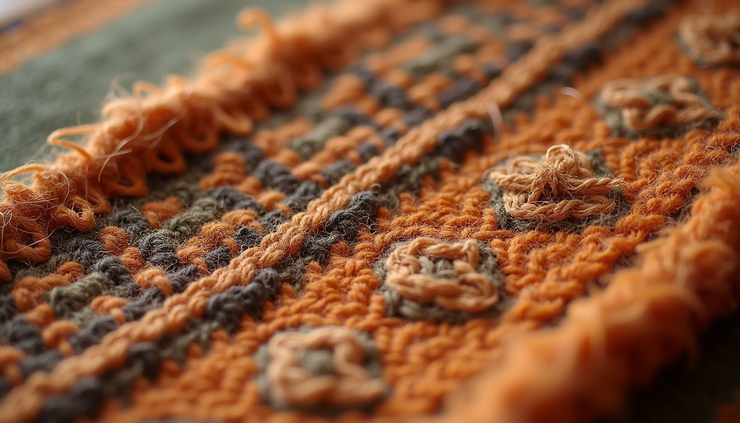
Traditional crafts such as weaving, pottery, and tile-work provide tangible lessons in geometry. These crafts are not only artistic expressions but also physical manifestations of mathematical principles like symmetry, tessellation, and spatial reasoning.
Grandparents pass down these skills through hands-on apprenticeship, guiding grandchildren as they create patterns and shapes. This tactile learning builds a strong foundation in spatial awareness and problem-solving.
For instance, a weaving pattern might encode complex geometric sequences, teaching children how shapes fit together and repeat. This process preserves a cultural aesthetic while simultaneously laying groundwork for STEM skills.
Linguistic Counting Systems
Many native dialects contain unique numerical structures that shape how speakers perceive time, quantity, and value. These linguistic counting systems often differ significantly from the base-10 system dominant in Western education.
For example, some languages use base-20 or incorporate spatial metaphors in counting, which influences how children understand numbers and relationships between them. When heritage languages fade in migrant communities, this mathematical biodiversity risks being lost.
Bilingual children often synthesize these diverse logic systems, blending ancestral counting methods with formal math education. This synthesis can enhance cognitive flexibility and deepen understanding of mathematical concepts.
Preserving Ancestral Mathematical Wisdom
Traditional storytelling and cultural practices are more than nostalgic relics. They are rigorous frameworks that encode complex logic and spatial reasoning. By recognizing and valuing these oral traditions, educators and families can support migrant students in bridging cultural heritage with modern mathematical learning.
This approach encourages students to see math not just as abstract numbers but as a living, cultural practice connected to their identity and history. It also highlights the importance of preserving heritage languages and crafts as vital carriers of mathematical knowledge.
Importance of Storytelling for Multilingual Students
Migrant grandparents’ storytelling offers a powerful tool for mastering complex mathematical logic. Their oral algorithms, hands-on crafts, and unique counting systems provide rich, contextual learning that complements formal education. Embracing these traditions can help migrant students unlock their full potential in mathematics while preserving a valuable cultural legacy.
Benefits of Integrating Cultural Traditions
For multilingual students, engaging with storytelling and cultural practices is particularly important for several reasons:
Enhances Language Skills: Storytelling in their native language helps students develop linguistic proficiency and confidence, which can transfer to their academic performance in multiple languages.
Promotes Cultural Identity: Valuing and integrating ancestral knowledge fosters a sense of belonging and pride in one's heritage, which is crucial for self-esteem and motivation in learning.
Contextual Learning: Traditional stories and crafts provide real-world applications of mathematical concepts, making learning more relevant and engaging for students.
Encourages Critical Thinking: Analyzing and interpreting stories and crafts helps students develop problem-solving skills and logical reasoning, essential components of mathematical understanding.
Exploring Family and Community Traditions
Consider exploring the stories and crafts in your own family or community. These traditions hold keys to understanding math in ways textbooks cannot capture. By valuing and integrating ancestral knowledge, we build stronger connections between culture and learning, ensuring that ancient wisdom continues to thrive in new generations.
Conclusion
The exploration of traditional storytelling, crafts, and linguistic counting systems reveals a profound connection between cultural heritage and mathematical understanding. Migrant grandparents serve as invaluable resources, imparting complex mathematical logic through oral traditions that resonate with young learners. By embracing these practices, educators and families can create a more inclusive learning environment that honors the rich legacies of migrant communities.
Integrating these cultural traditions not only enhances mathematical skills but also fosters a deeper appreciation for one's heritage, promoting both identity and academic success. As we recognize the significance of these ancestral teachings, we pave the way for a future where math is seen as a vibrant, culturally rich discipline, accessible to all students. Ultimately, the stories told around the hearth are not just memories; they are powerful tools for mastering complex concepts and bridging the gap between past and present learning.


Comments