Unlocking Neuroplasticity: The Cognitive Power of Daily Alphabet Switching

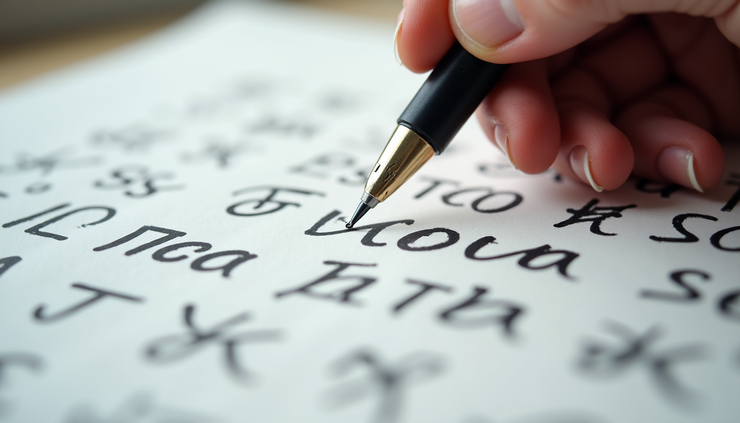
Switching between three distinct alphabets every day is not just a linguistic exercise. It is a powerful way to challenge the brain and build mental resilience. By toggling among Cyrillic, Kanji, and Latin scripts, we give our minds a demanding cognitive workout that rewires neural pathways and enhances mental flexibility. This daily practice creates a biological advantage that sharpens focus, speeds up thinking, and strengthens the brain’s ability to adapt.
The High-Stakes Cognitive Challenge
Most people use one alphabet daily, which keeps the brain in a comfortable, low-gear mode. When you switch between three alphabets, your brain faces a high-stakes challenge. Each script requires a different visual decoding process:
Cyrillic has sharp angles and unique letter shapes unfamiliar to Latin readers.
Kanji consists of complex strokes and symbolic characters that demand detailed visual analysis.
Latin script is familiar but still requires switching mental gears when combined with the other two.
This constant toggling forces the brain to recalibrate its visual and linguistic processing systems. The friction created by shifting between these alphabets is like a cognitive gym session that builds stronger neural connections. It is not just about reading or writing; it is about training the brain to handle complexity and change.
Building a Resilient Mind Through Neuroplasticity
Neuroplasticity is the brain’s ability to reorganize itself by forming new neural connections throughout life. When you switch alphabets daily, you stimulate this process in a unique way. Instead of letting mental flexibility fade, you actively build it by:
Engaging different brain regions responsible for visual recognition and language processing.
Strengthening pathways that support rapid adaptation to new information.
Enhancing working memory and attention control as the brain manages multiple decoding systems.
This practice turns your brain into a resilient powerhouse that thrives on structural adaptation. It goes beyond learning new languages or scripts; it creates a mind that can handle chaos and complexity with ease.
How Visual Decoding Shapes Cognitive Performance
Words are more than language; they are raw data for your brain’s hardware. Each alphabet acts like a different operating system for your brain’s visual decoder. Switching between them installs a superior mental operating system by:
Forcing the brain to recognize and interpret diverse visual patterns.
Training the eyes and brain to quickly adjust to new shapes and structures.
Improving overall cognitive speed and accuracy in processing information.
For example, reading Kanji requires attention to intricate details and spatial relationships, while Cyrillic demands quick recognition of unfamiliar letter forms. Latin script, though familiar, serves as a baseline that highlights differences and sharpens contrast in mental processing.
The Script Switching Experiment
Try this daily challenge to experience the neuroplasticity advantage:
Morning: Write a short journal entry in Cyrillic. Focus on letter shapes and flow.
Afternoon: Read a simple text or news article in Kanji. Notice the complexity of characters.
Evening: Compose an email or message in Latin script. Pay attention to speed and clarity.
This routine forces your brain to switch visual decoders multiple times a day. Over weeks, you will notice improved mental agility, faster reading speeds, and better focus. The brain adapts to this challenge by building stronger, more flexible neural networks.
Practical Benefits Beyond Language
The cognitive benefits of daily alphabet switching extend beyond language skills, influencing various aspects of mental functioning and overall cognitive health:
Improved multitasking: Engaging in the practice of switching between different alphabets or scripts enhances the brain's capacity to manage multiple streams of information simultaneously. This cognitive exercise trains the mind to prioritize tasks and allocate resources efficiently, making it easier to juggle various responsibilities in everyday life. For instance, individuals who regularly practice this skill may find it easier to handle phone calls while taking notes or managing several projects at work without feeling overwhelmed.
Enhanced problem-solving: The mental flexibility gained from alphabet switching fosters creative thinking and adaptability. When faced with challenges, individuals trained in this practice tend to approach problems from multiple angles, generating innovative solutions. This ability to think outside the box is crucial not only in academic settings but also in professional environments where adaptability is key to success. Moreover, the experience of switching between different linguistic frameworks can lead to a deeper understanding of complex concepts, as it encourages the brain to make connections that might not be immediately apparent.
Sharper attention: The constant recalibration required for switching scripts effectively trains the brain to maintain sustained focus and reduces mental fatigue over time. This enhanced attention span is particularly beneficial in an age where distractions are ubiquitous, allowing individuals to concentrate more effectively on tasks at hand. As a result, those who practice alphabet switching may find they can engage in activities such as reading, studying, or working for longer periods without losing their concentration or becoming easily distracted.
Better memory: The act of switching between different writing systems strengthens working memory by requiring individuals to juggle various symbol systems. This cognitive exercise not only helps in retaining information but also enhances the ability to recall it when needed. As individuals become adept at managing multiple alphabets, they may notice improvements in their overall memory, which can translate into better performance in academic pursuits, professional tasks, and even daily activities such as remembering names, dates, and other important information.
These benefits apply to many areas of life, from learning new skills to managing complex tasks at work or school.
Final Thoughts on Daily Alphabet Switching
Switching between Cyrillic, Kanji, and Latin scripts every day is more than a linguistic curiosity. It is a deliberate cognitive strategy that rewires the brain for peak performance. This daily mental workout builds a resilient mind that thrives on change and complexity. By embracing this challenge, you unlock a neuroplasticity advantage that sharpens your focus, speeds up thinking, and strengthens your mental agility.
Start small, stay consistent, and watch your brain transform into a flexible, powerful tool ready for any cognitive challenge.



Comments